Updated 09-January-2026
Many students tell us the same thing every exam season: “I sit down to revise with good intentions, but after a few minutes my focus disappears.” Notifications, fatigue, and feeling overwhelmed often make studying feel far harder than it needs to be.
The Pomodoro Technique is a simple study method that helps GCSE and A Level students stay focused, manage time better, and revise more effectively. It’s widely used by students preparing for high-pressure exams because it breaks revision into short, distraction-free sessions that are easier to maintain.
This guide explains what the Pomodoro Technique is, why it works so well for exam revision, and how students can use it alongside structured academic support to improve results.
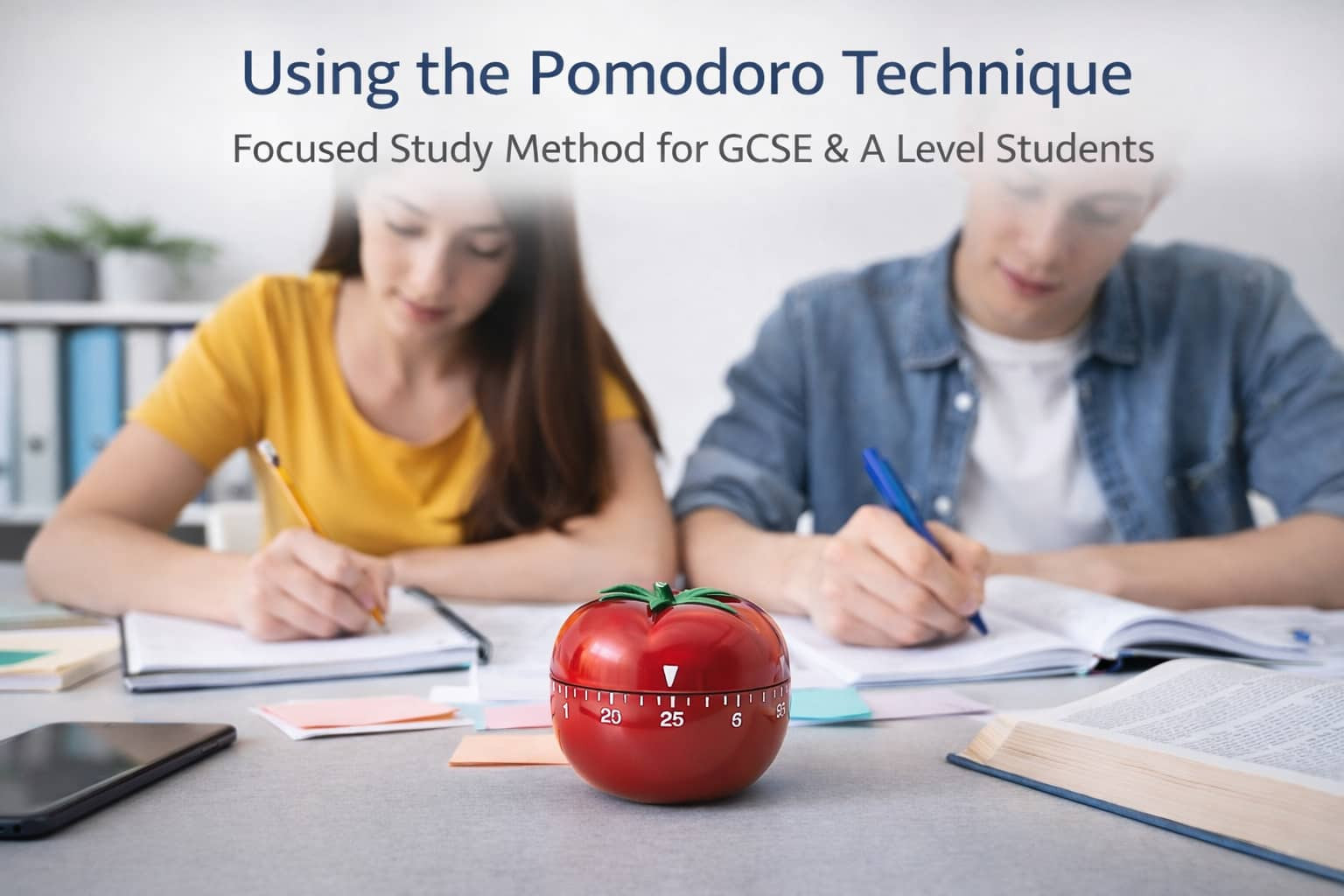
The Pomodoro Technique is a time-management method based on short, focused study sessions followed by regular breaks.
A single Pomodoro works like this:
• Study for 25 minutes with full focus
• Take a 5-minute break
• Repeat this cycle four times
• Take a longer break of 15–30 minutes
The aim is to maintain concentration without burning out.
In our experience, exam revision often fails not because students don’t try hard enough, but because they attempt to study for long periods without structure.
Pomodoro works because it:
• Reduces mental fatigue
• Improves concentration
• Prevents procrastination
• Makes large topics feel manageable
• Encourages consistent revision
For GCSE and A Level students, this structure is especially effective during busy revision periods.
The Pomodoro Technique is ideal for:
• GCSE students revising multiple subjects
• A Level students managing heavy workloads
• Students who get distracted easily
• Students who struggle to start revision
• Private candidates preparing independently
It is particularly useful when combined with guidance from a professional tuition centre in London, where students receive structured teaching alongside independent revision.
Focus on a single task, such as revising a Biology topic or completing exam questions.
During this time:
• No phone
• No switching subjects
• No multitasking
Use the 5-minute break to stretch, drink water, or rest your eyes — not endless scrolling.
After four Pomodoros, take a longer break and briefly review what you’ve covered.
GCSE Student
• Pomodoro 1: Maths revision
• Pomodoro 2: English Language practice
• Pomodoro 3: Science equations
• Pomodoro 4: Past paper questions
A Level Student
• Pomodoro 1: A Level Biology topic review
• Pomodoro 2: Diagram practice
• Pomodoro 3: Exam questions
• Pomodoro 4: Mark scheme analysis
Pomodoro sessions are most effective when paired with real exam-style practice, such as GCSE and A Level past papers.
Many students try Pomodoro but don’t use it correctly. The most common mistakes include:
• Using phones during breaks
• Skipping breaks completely
• Switching tasks mid-session
• Studying without a clear goal
Pomodoro only works when sessions are focused and disciplined.
Studying for several hours without breaks often leads to low retention and high fatigue. Pomodoro helps students maintain focus without feeling overwhelmed.
Many tutors recommend Pomodoro alongside lessons at an A Level tuition centre in London, as it reinforces learning between sessions and improves consistency.
Parents can help by:
• Encouraging structured revision times
• Reducing distractions at home
• Supporting regular breaks
• Combining Pomodoro with guided tuition
This balanced approach often leads to better confidence and stronger exam performance.
Pomodoro is flexible, but some students prefer longer focus periods. In that case, sessions can be adjusted to 40–50 minutes with slightly longer breaks.
What matters most is structured, distraction-free study — not the exact timing.
Is the Pomodoro Technique suitable for GCSE students?
Yes. It is especially effective for GCSE students because it helps manage multiple subjects and improves focus during revision.
Can A Level students use Pomodoro for long topics?
Yes. Breaking large topics into smaller sessions improves understanding and retention.
Do I need special tools to use Pomodoro?
No. A simple timer or phone alarm is enough.
Should Pomodoro replace tuition or lessons?
No. Pomodoro works best alongside structured teaching and exam guidance.
The Pomodoro Technique is a simple but powerful study strategy for GCSE and A Level students. By breaking revision into focused sessions, students can improve concentration, reduce stress, and study more effectively.
When combined with expert guidance from a trusted tuition centre and regular exam practice, Pomodoro can make a real difference to exam confidence and results. Consistent, structured study always beats last-minute cramming — and Pomodoro helps make that consistency achievable.
Recent Posts
Categories
Tags