Updated 18-February-2026
Preparing for A-Level exams isn’t just about revision.
Understanding the official exam rules is equally important.
Every year, students across the UK lose marks — and in some cases face serious penalties — simply because they were unaware of exam regulations set by national authorities.
If you’re sitting A-Levels in 2026 (whether through school, college, or as a private candidate), this guide explains everything clearly so you can walk into the exam hall calm, confident, and fully prepared.
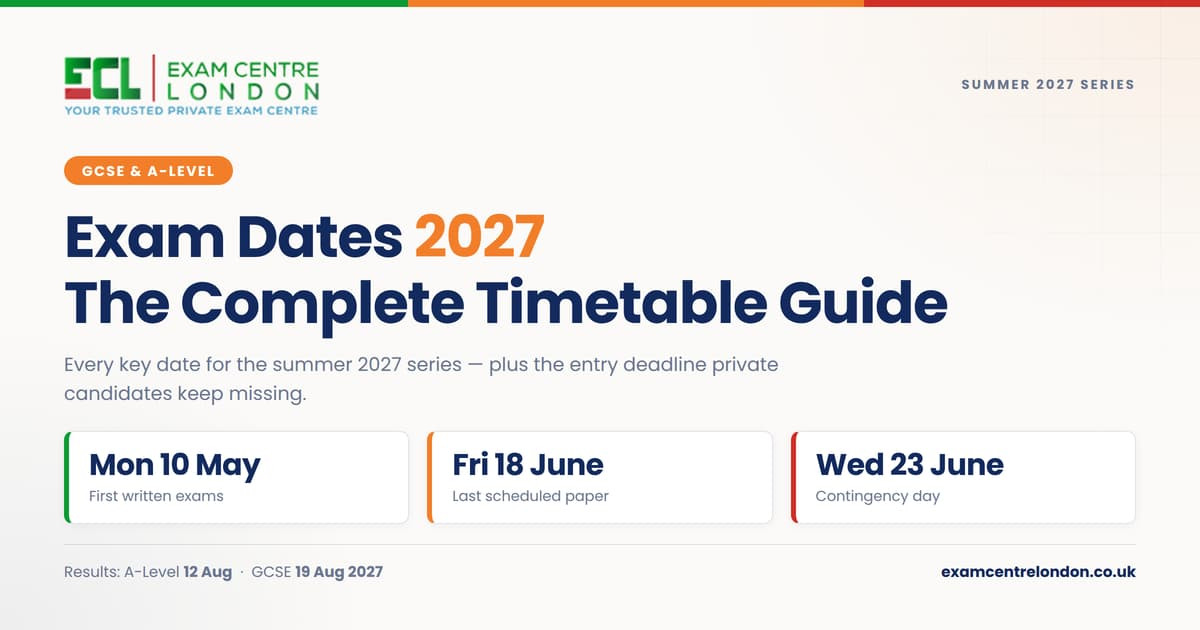
Most A-Level exams in the UK take place between May and June 2026.
Exact dates depend on:
Your subject
Your exam board (AQA, Edexcel, OCR, WJEC/Eduqas)
Whether you are sitting A-Level, AS Level, or other Level 3 qualifications
👉 Always confirm your official schedule on the
A-Level Exam Timetable 2026 UK page before planning revision or travel arrangements.
All A-Level exams in England, Wales, and Northern Ireland follow national regulations set by the Joint Council for Qualifications (JCQ).
JCQ oversees:
Exam conduct
Security procedures
Malpractice rules
Penalties and disqualification processes
These regulations apply equally to:
Schools
Colleges
Independent exam centres
Private candidates
Exam centres must follow JCQ rules strictly.
On exam day, only bring items that are allowed.
Black ink pens
Pencils (if needed)
Transparent pencil case
Approved calculator (if permitted for the subject)
Valid photo ID (especially important for private candidates)
Exam confirmation slip (if your centre provides one)
Keep everything minimal and organised.
Bringing unauthorised items can lead to serious consequences — even if unused.
Mobile phones
Smartwatches or fitness trackers
Earphones / AirPods
Notes or revision cards
Bags (unless instructed)
Electronic devices of any kind
Even having a phone switched off in your pocket can lead to disqualification.
This is one of the most common reasons students lose results.
Arriving late increases stress and may prevent entry.
Arrive at least 30 minutes before the exam
Check your room and seat number
Listen carefully to invigilator instructions
Remain silent at all times
Stay seated until officially dismissed
Respecting exam hall conduct protects both you and other students.
Once the paper begins:
Write clearly in black ink
Follow question instructions carefully
Do not communicate with anyone
Do not look around the room
Raise your hand if you need assistance
If you feel unwell or unsure, inform the invigilator immediately.
Small mistakes in behaviour can result in warnings or formal penalties.
If you are sitting A-Levels independently, pay extra attention to:
Photo ID requirements
Result collection method
Centre-specific communication
Appeals and reviews of marking deadlines
Private candidates must follow the same JCQ regulations as school students.
If you need to register, you can
book A-Level exams as a private candidate through an approved exam centre.
Choosing a professional, regulated centre reduces risk and confusion.
Understanding exam rules is easier when you practise properly.
Using real past papers helps you:
Get used to exam timing
Improve answer structure
Reduce panic under pressure
Practise with board-specific A-Level past papers here:
https://meritstudyresources.co.uk/past-papers/a-levels/
Proper practice lowers exam-day mistakes.
Many penalties happen due to simple avoidable errors:
Arriving late
Forgetting ID
Bringing a phone
Not reading instructions
Talking before or after the exam
Leaving early without permission
Avoiding these protects your final grade.
At least 30 minutes before the scheduled start time.
No. Phones are strictly prohibited inside the exam hall.
Yes. Most centres require valid photo ID for entry.
Penalties range from mark deductions to full disqualification, depending on severity.
Yes. All major boards follow JCQ national regulations.
Exams test your knowledge — but discipline and preparation matter just as much.
Before your exam:
Sleep properly
Eat lightly
Check your route
Pack your materials the night before
Stay calm and focused
Following official A-Level Exam Rules 2026 UK ensures your hard work is protected.
Preparation is power.
Confidence comes from clarity.
You now have both.
Recent Posts
Categories
Tags