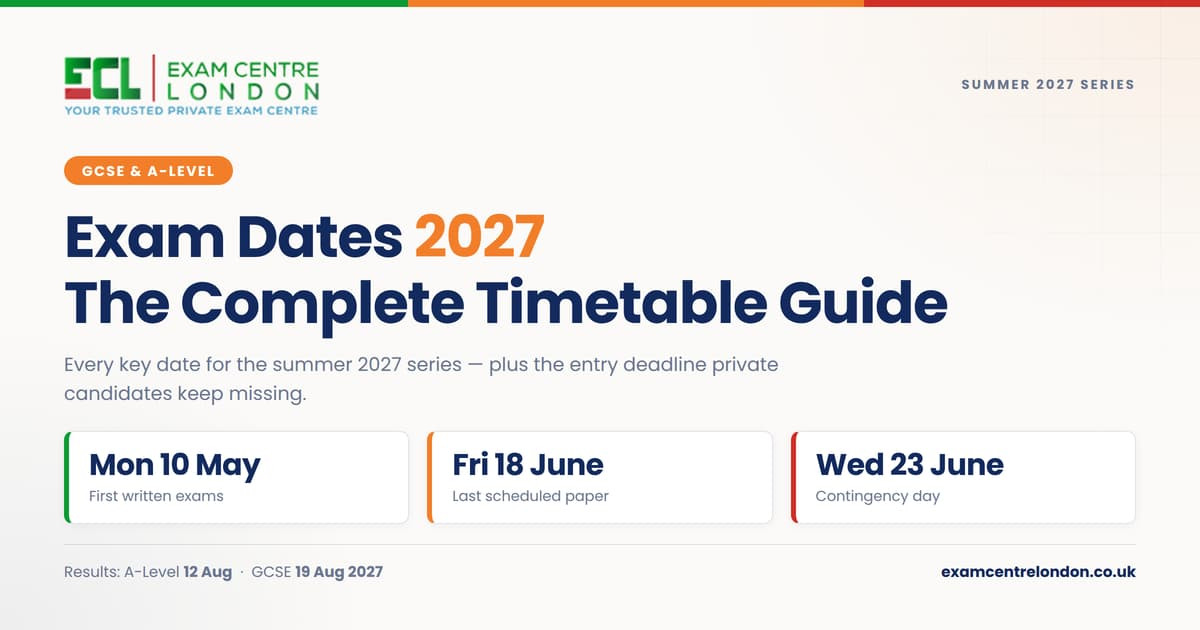
If you’re sitting OCR GCSE exams in 2026, having a clear timetable is the first step towards a successful revision plan. OCR publishes a detailed schedule of exam dates and times for each subject; the final timetable notes that morning sessions normally begin at 9:00 AM and afternoon sessions at 1:30 PM, with exams commencing no earlier than 8:30 AM or later than 2:00 PM. Students must be available until at least Wednesday 24 June 2026, which is designated as a contingency day.
Below you’ll find a streamlined version of the official timetable (final edition dated August 2025) for the most popular GCSE subjects. Use this to structure your revision—but always cross‑check with the official document. We’ve also included advice on how to use the dates strategically and links to further resources such as past papers and tuition.
Note: Morning exams typically begin at 9:00 AM and afternoon exams at 1:30 PM. Schools may shift start times within the ranges stated in the official timetable.
OCR specifies that all exams must be taken on the day and at the session shown on the timetable. Centres can adjust starting times within the morning (8:30 AM–9:30 AM) or afternoon (1:00 PM–2:00 PM) sessions but must finish within the session. Candidates must remain under supervision until 10:00 AM for morning exams and 2:30 PM for afternoon exams.
The awarding bodies have also designated the morning and afternoon of Wednesday 24 June 2026 as contingency sessions. All students should remain available until this date in case exams need to be rescheduled due to unforeseen disruption.
Knowing your exam dates is only half the battle; using them strategically will maximise your revision. Here are some tips:
Prioritise your earliest exams. Focus on subjects scheduled in early May—such as English Literature and Mathematics—first. Allocate extra time to subjects with less time between papers (e.g., Maths and Science, which have papers spread across May and June).
Use the gaps wisely. The timetable has built‑in gaps between papers. For example, there are nearly three weeks between English Language Paper 1 (21 May) and Paper 2 (5 June). Use these gaps to review feedback from mock exams and strengthen weaker areas.
Balance foundation and higher tiers. If you’re taking higher‑tier papers, the dates are the same as foundation papers for most sciences. Plan your revision schedule to ensure both tiers are covered while avoiding burnout.
Stick to session times. Since exams always start in the morning or afternoon sessions, simulate these timings during practice papers. This helps you get used to being alert at the right times and improves exam endurance.
Build your revision plan. Create a flexible timetable with clear blocks for each subject. Incorporate regular breaks and ensure you have buffer sessions for unforeseen events. Our sister site Merit Tutors has a dedicated piece on creating a 60‑Day A‑Level revision strategy—much of the advice applies to GCSE revision as well.
Following a structured timetable allows you to work smarter, not harder. Students who perform well usually align their study plans with the order of exams. Consider:
Active recall & spaced repetition: Test yourself frequently and revisit topics at intervals to reinforce memory. For example, review notes from Biology Paper 1 again just before Paper 2 to strengthen connections.
Mixing subjects (interleaving): Rather than spending an entire day on one subject, alternate between different topics. This improves retention and keeps revision interesting.
Past papers: Practise with past OCR papers under timed conditions. This helps you understand examiners’ expectations and build confidence. You’ll find a wide selection of past papers on our resources page.
Well‑being: Don’t forget self‑care. Short breaks, regular meals and sufficient sleep are crucial for memory and focus. Avoid marathon cram sessions in favour of shorter, focused sessions.
Even with a timetable, some pitfalls can derail your preparation:
Ignoring the timetable until the last minute: Cramming only leads to stress. Start early and refer to the timetable frequently.
Neglecting early exams: Students sometimes focus on later exams and overlook those in early May. Prioritise the first papers to reduce last‑minute pressure.
Poor time management: Leaving little time between papers can make it difficult to revise effectively. Use the built‑in gaps and plan revision tasks around them.
Skipping breaks: Without breaks, concentration wanes and information retention suffers. Schedule rest just as you schedule study.
For the full list of subjects—including less common options—consult the official PDF from OCR:
👉 View the OCR GCSE & Cambridge Nationals Final Timetable 2026.
Always refer to the official document in case of updates or changes. The final version we used here is dated August 2025.
The first OCR GCSE exams begin in the second week of May. English Literature Paper 1 is on 11 May and Mathematics Paper 1 on 14 May. Exams continue through June with contingency sessions scheduled for 24 June 2026.
OCR GCSE Mathematics comprises three papers: two calculator papers and one non‑calculator. Foundation and Higher tiers sit their papers on the same dates: 14 May, 3 June and 10 June, each lasting 1 h 30 m.
Most exams are scheduled in the morning, but some subjects (including Geography Paper 2 and certain science papers) are in the afternoon. Always check the official timetable and confirm the start time with your school.
Recent Posts
Categories
Tags




 Updated 24-March-2026