Updated 05-May-2026
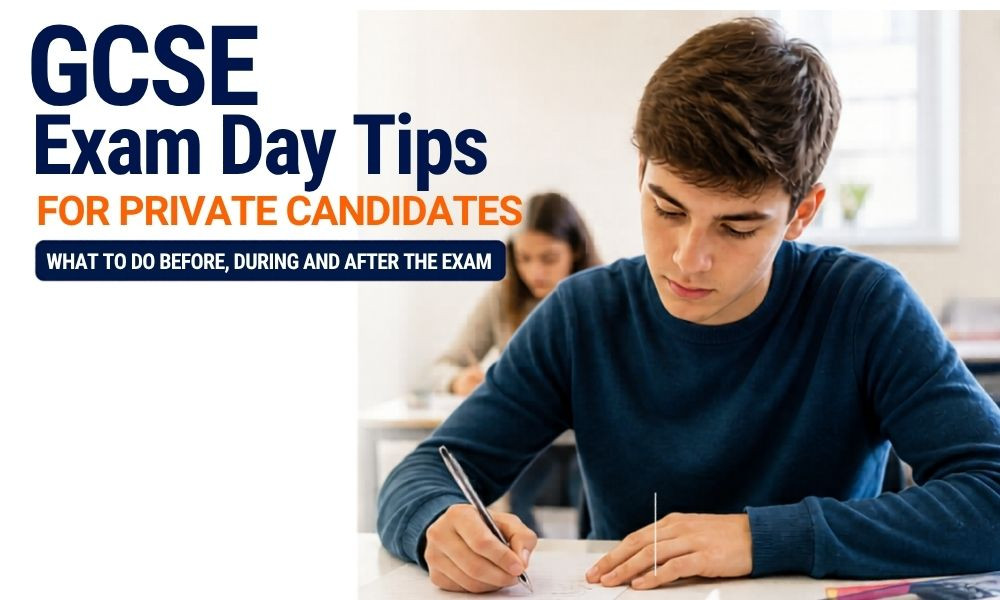
Sitting GCSE exams as a private candidate can feel very different from taking them in school. Without the daily structure of classes or direct teacher guidance, everything — from preparation to exam-day organisation — depends on you.
But the good news is this: with the right approach, private candidates often perform just as well, if not better. The key is knowing exactly what to expect and how to handle each stage of the exam day calmly and confidently.
This guide walks you through what to do before, during, and after your GCSE exam so you can avoid common mistakes and stay fully in control.
Success on exam day begins long before you enter the exam hall. For private candidates, preparation is not just about revision — it’s also about organisation.
Make sure you know your exam centre location, reporting time, and entry details well in advance. Unlike school students, you won’t have reminders on the day, so double-check everything yourself.
The night before the exam matters more than most students realise. Try to avoid last-minute cramming and focus instead on light revision, reviewing key concepts, and getting proper sleep. A tired mind struggles with focus, even if you’ve studied well.
On the morning of the exam, aim to arrive early. Giving yourself at least 30 minutes before the start time allows you to settle in without stress. Rushing at the last minute can affect your concentration before the exam even begins.
Also, make sure you bring the correct essentials. A valid photo ID is usually required for private candidates, along with basic stationery such as black pens and any permitted equipment for your subject.
Once you’re inside the exam hall, your mindset becomes just as important as your knowledge.
Start by reading the instructions carefully. Many students lose easy marks simply because they rush into answering without fully understanding the question. Taking a few extra seconds to read properly can make a big difference.
Time management is critical. It’s better to attempt all questions rather than spending too long on one difficult section. If you get stuck, move on and return later if time allows.
Try to stay calm if you feel nervous — it’s completely normal. Focus on the question in front of you rather than worrying about the entire paper. Breaking the exam into smaller parts makes it more manageable.
If you need help, such as extra paper or clarification on instructions, raise your hand and wait for the invigilator. Never try to communicate with other candidates, as this can lead to serious penalties.
Once the exam ends, many students immediately start discussing answers with others. While this might feel natural, it can often increase anxiety, especially if you think you made mistakes.
Instead, take a short break and reset your mind before preparing for your next exam. GCSEs are a series of papers, not just one test, so staying consistent throughout the exam period is more important than focusing on a single performance.
If you have another exam coming up, shift your attention to that subject as soon as possible. Avoid dwelling on what you cannot change.
For private candidates, it’s also important to keep track of your results release process. Make sure you know how and when your results will be provided by your exam centre.
Even well-prepared students can lose marks due to simple errors.
Arriving late is one of the most common issues, and it can cause unnecessary panic. Forgetting ID or bringing prohibited items like mobile phones can also lead to serious consequences.
Another mistake is overthinking during the exam. Changing correct answers due to self-doubt often results in losing marks.
Staying calm, following instructions, and trusting your preparation can prevent most of these problems.
Being a private candidate means taking full responsibility for your GCSE journey — but it also gives you independence and control.
With proper planning, a calm mindset, and awareness of exam-day rules, you can perform just as strongly as any school candidate.
Remember, exams are not just about knowledge — they are about how well you apply it under pressure. And with the right preparation, that is something you can absolutely manage.
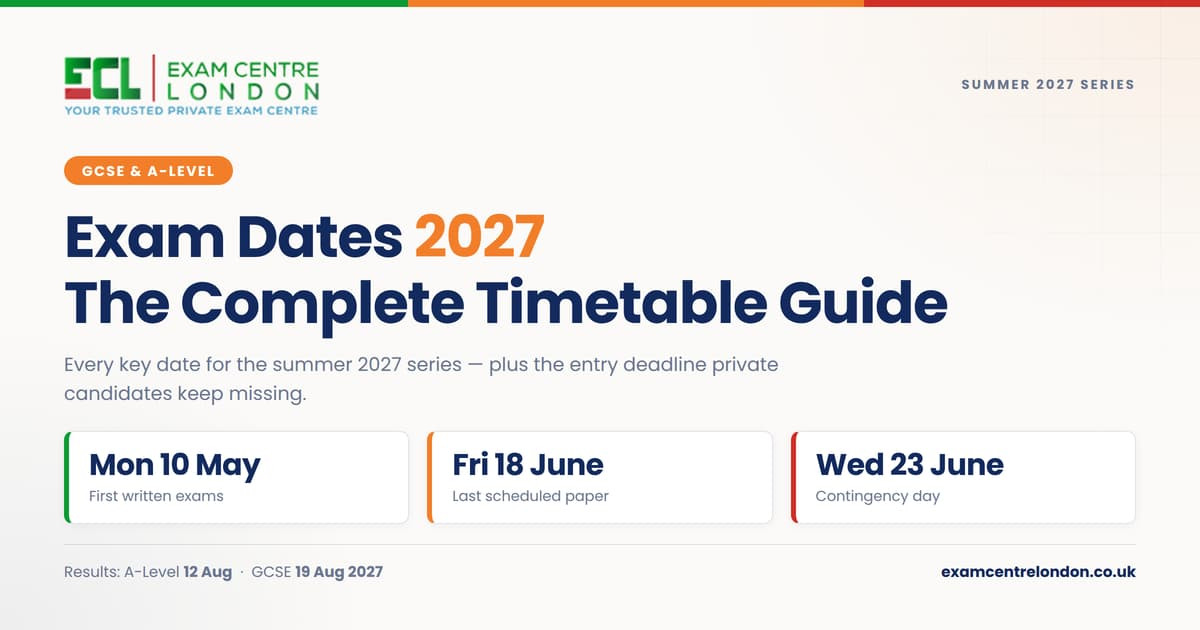
GCSE Exam Timetable 2026 (All Boards)
Check your full exam schedule and plan your revision timeline effectively.
Book GCSE Exams as a Private Candidate
Register for your GCSE exams through an approved centre.
GCSE Results Day 2026 Guide
Understand what happens on results day and what steps to take next.
Recent Posts
Categories
Tags